Comparing Canadian Casino Loyalty Programs Without Missing the Fine Print
There are many different incentives and campaigns to your Rumors Slots casino
October 20, 2026Wiosenne_łowienie_z_Riverspin_przynosi_niezapomniane_wrażenia_każdemu_pasjona
October 20, 2026Comparing Canadian Casino Loyalty Programs Without Missing the Fine Print
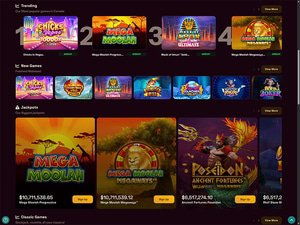
Loyalty schemes can make a casino account easier to navigate, but their value depends on how points are earned, redeemed and restricted. The six-level programme described by grizzlys quest includes Bronze, Silver, Gold, Platinum, Diamond and invitation-only Privé tiers. Canadian players should assess the system as an account feature rather than assume that a higher status automatically means better value. The most useful comparison starts with qualification rules, reward flexibility, promotional conditions and the controls available in the account.
Start by separating tiers from everyday promotions
A loyalty tier is usually a continuing status attached to an account, while a promotion is a temporary offer with its own expiry date and conditions. The programme described here awards points through real-money play, and those points may be redeemed for bonus credits. Higher levels are also described as offering additional point multipliers or daily specials. That makes tier progress potentially more relevant to regular activity than a single welcome offer.
Daily Deals should be assessed separately. These offers refresh every 24 hours and may be individually tailored, with the percentage, deposit requirement and wagering rules depending on what appears in the account. A tailored deal may look more attractive than a standard promotion, but its usefulness cannot be judged without reading the specific terms. The same applies to prize-drop events or weekly draws, where entry thresholds and prize values can change.
Keeping these categories separate prevents a common mistake: treating every displayed reward as part of the loyalty programme. Make a short record of the tier, points balance, available redemption choices, expiry dates and any active promotion. This simple account check helps show whether a reward comes from ongoing play or from a separate campaign. It also makes it easier to identify conditions that would otherwise be overlooked in a busy casino lobby.
How should players compare the six levels?
The six reported levels are Bronze, Silver, Gold, Platinum, Diamond and invitation-only Privé. The available material does not establish fixed point thresholds, guaranteed benefits at every level or a universal value for each point. For that reason, players should not assume that reaching a named tier will produce a particular cash equivalent, faster service or exclusive game access unless the current account terms say so.
A practical comparison focuses on four questions. First, how many points are awarded for the type of real-money play being considered? Second, does the tier provide a multiplier, and if so, how is it applied? Third, what can points be exchanged for, and are the resulting credits subject to wagering? Finally, do points or status expire after inactivity or a stated period? These questions matter more than the prestige of a tier name.
Use the account’s loyalty page as the primary reference because the programme may display personalised information. A useful comparison note could contain the current tier, points required for the next level, the reward currently available and any restrictions on redemption. If an offer mentions “bonus credits,” read whether those credits are withdrawable immediately or must be played through first. No value should be assigned until the applicable conditions are clear.
Check what points really cost to earn
Points are not free money. They are connected to qualifying real-money activity, so the cost of reaching a tier depends on the games played, the amount wagered and the player’s results. Chasing a multiplier can encourage unnecessary wagering, particularly when the next status level appears close. A reward is only useful if the activity would have been reasonable without the loyalty incentive.
The game catalogue includes slots, jackpots, table games and live dealer content, but the source material does not establish one universal points formula for every category. Players should therefore avoid assuming that a dollar wagered on one game earns the same points as a dollar wagered elsewhere. Promotional play may also be treated differently from ordinary real-money play, so the loyalty terms should be checked before relying on a projected balance.
There is also an important distinction between loyalty progress and bonus wagering. For example, a promotional balance may carry contribution rules that vary by game type, while loyalty points may follow a separate calculation. A player comparing options should record whether the activity uses cash, bonus funds or a combination. If the calculation is not plainly stated, support should be asked for clarification before spending money to pursue a tier.
Look closely at redemption and account restrictions
Redemption is where a loyalty scheme becomes either practical or disappointing. The described programme allows points to be redeemed for bonus credits, but the available material does not establish a fixed conversion rate or confirm that every account receives identical choices. Check the minimum redemption amount, whether points expire, whether a redemption can be cancelled and whether credits have a separate expiry date.
Account and promotion conditions can affect access to rewards. Identity or payment-method checks may be requested before certain account actions, and incomplete information can delay transaction processing. Provincial eligibility also matters: the available information says the service is not registered with iGaming Ontario and that promotions are unavailable to Ontario residents. It does not follow that the same promotional or loyalty conditions apply across every province.
Keep records of the displayed terms when accepting a reward, especially if the offer is personalised. A screenshot or written note can help identify the name of the promotion, the date accepted, the wagering requirement and the expiry period. If a cashout, account review or self-exclusion changes reward eligibility, the account terms should explain the effect. Players should not rely on affiliate advertising when the casino’s own conditions differ.
Use loyalty features without letting them set the budget

A loyalty programme works best when it follows a pre-existing entertainment budget rather than creating one. Decide the amount and time limit before opening games, then treat points as incidental. A higher multiplier does not change the underlying risk of losing money, and a pending reward is not a reason to continue playing after the planned limit has been reached.
Account controls can support this approach. The available information describes daily, weekly and monthly deposit limits, session reminders, self-assessment information and self-exclusion. Set a limit before pursuing a tier, and consider a session reminder if play tends to extend beyond the intended time. A loyalty balance should never be used to justify raising a deposit limit or recovering previous losses.
For broader information about gambling-related risks and support, readers can consult CAMH information on problem gambling. The goal is not to eliminate every reward feature, but to keep it in proportion. Compare the actual terms, use only money set aside for entertainment and stop when the personal limit is reached, regardless of the tier or points balance.
Frequently asked questions about loyalty programmes
Do higher loyalty tiers guarantee better returns?
No. Higher tiers may include point multipliers or daily specials, but the available information does not establish guaranteed values, fixed conversion rates or identical benefits for every account. Players should check the current loyalty display and terms before assuming that a status upgrade will produce a particular financial advantage.
Can loyalty points be treated like cash?
No. The programme describes points as redeemable for bonus credits, not as cash that can automatically be withdrawn. Bonus credits may carry wagering, expiry or game-eligibility conditions. Review the redemption terms carefully and confirm how the resulting balance is treated before deciding what the points are worth.
Are loyalty promotions available in every Canadian province?
Not necessarily. Eligibility can depend on provincial rules, residency and the operator’s current terms. The available information specifically says promotions are unavailable to Ontario residents and that the service is not registered with iGaming Ontario. Players should verify their own province’s eligibility rather than generalise from another account.
